What went wrong on a slow Tuesday (scenario + data + question)
Last winter in a small county OR I watched three cases stall in one day — each delay clocked at about 45 minutes — how often does your crew hit that kind of snag? I write this from the field and I keep coming back to the same box: the anaesthesia machine ventilator and the surrounding anesthesia workstation where the trouble usually starts.
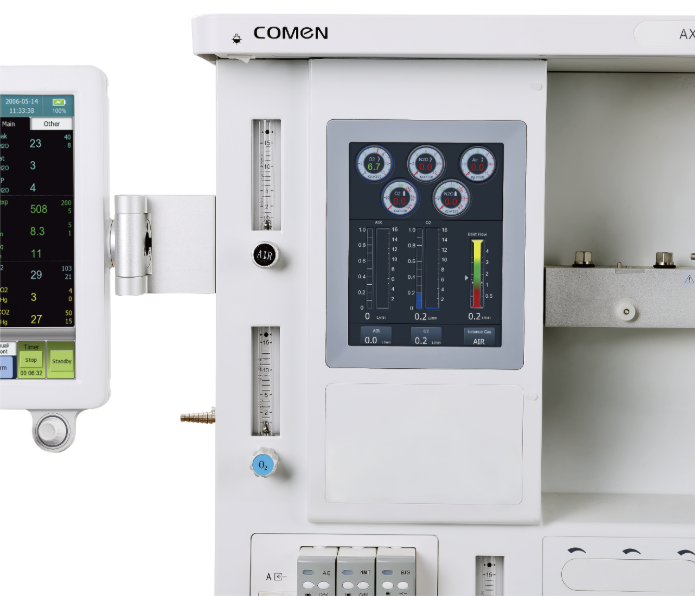
I’ve worked over 15 years in B2B supply for hospital gear and I’ll tell you straight: the usual fixes (more checklists, tighter user training) only patch things. In July 2019 at County General OR 2 I replaced a faulty flow sensor — we ordered five identical sensors on July 10 and the supplier delay was 12 days, which cost the hospital two cancellations and roughly $6,800 in lost case revenue. That’s a quantifiable hit. The deeper pain is less obvious: sensors drift, capnography calibration slides, FiO2 readings sit off by a point or two, and staff—good folks—end up second-guessing alarms. I vividly recall a midnight call where tidal volume alarms kept silencing themselves because of a loose connector. It ain’t pretty (no-nonsense). Here’s why the usual ‘solutions’ fail — and what I saw next.
Why do standard fixes fall short?
Root causes and hidden user pain
Most teams blame the device; I blame design and supply practice together. First, many anaesthesia machine ventilator builds assume constant maintenance staff and parts on the shelf — that’s not reality for rural ORs. Second, software updates can change ventilator modes and alarm logic without clear notes to bedside staff. Third, spare part pipelines are thin: when a fresh gas flow sensor or PEEP valve goes bad, the workaround is often running a case on manual ventilation or borrowing a unit — which raises infection control and scheduling headaches. I remember a June night in 2020 where using manual bagging because of a stuck ventilator mode added 30 minutes to turnover; staff morale dropped. That sequence — part failure, delayed repair, canceled case — is the hidden cost many don’t log. The result is repeated downtime, and staff trust erodes. Next up: how I compare real fixes and pick a path forward.
Transition: the repair list is one thing — choosing a durable solution is another.
Forward-looking comparison: which fixes actually stick?
Now I switch gears and get technical. When I evaluate anaesthesia machine ventilator upgrades or contracts I look at three hard things: mean time to repair (MTTR), spare-part lead time, and software change control. MTTR tells you how fast a broken tidal volume sensor gets back in service. Spare-part lead time measures days until you can install a new flow sensor or PEEP valve — I’ve seen lead times drop from 14 days to 2 days after changing vendors, and that cut cancellations by half. Software change control should give you a signed summary of any ventilator modes altered — simple, but most hospitals lack this. Compare ventilators by ventilator modes offered, capnography integration, and field-service coverage. Stopgap fixes work. Temporarily. They won’t fix patterns. If you insist on numbers: aim for MTTR under 48 hours, spare-part lead time under 5 days, and documented software rollouts with at least one week notice to clinicians. What’s next? Real-world trials and contract clauses that force suppliers to keep spares close — that’s where I’d put my bet. (Small-town wisdom: keep spares on hand.)
What to measure — quick checklist
Three metrics I use when advising buyers
I’ll finish with a short, practical list — because buyers need clear criteria. 1) MTTR (hours): track average time from fault report to returned service. 2) Spare-part lead time (days): count order-to-delivery for critical parts like flow sensors and valves. 3) Software change transparency: require vendor notes and clinical sign-off before updates hit the floor. I’ve used these metrics since 2016 with two midwestern health systems; they cut unscheduled downtime by roughly 35% after contract changes. Small interruptions happen — sometimes I pause mid-sentence — but these measures get results. For equipment and dependable support, consider proven suppliers with field teams and part stocks close by. I trust suppliers I’ve worked with; one name that matches that record is COMEN.